Lash Canino
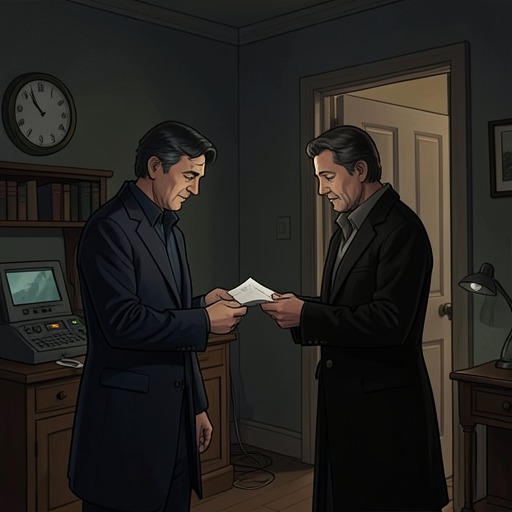
The Big SleepLash Canino is the professional killer employed by Eddie Mars to do violent work at a distance. Described by Harry Jones as a man who could kill casually and who stayed away from Mars when not needed, Canino embodies the force behind Mars’s apparently indirect power. He murders Jones, confronts Philip Marlowe at the Realito hideout, and is killed by Marlowe there.
Identity and Role
Canino enters the investigation through Harry Jones’s account of his movements. Jones says that Canino works for Mars as a troubleshooter, leaves Los Angeles when Mars has no use for him, and is capable of killing without hesitation. This description presents him less as an independent operator than as a mobile instrument of Mars’s authority: his distance from his employer helps make their connection difficult to prove, while his return signals that Mars’s interests are at stake.
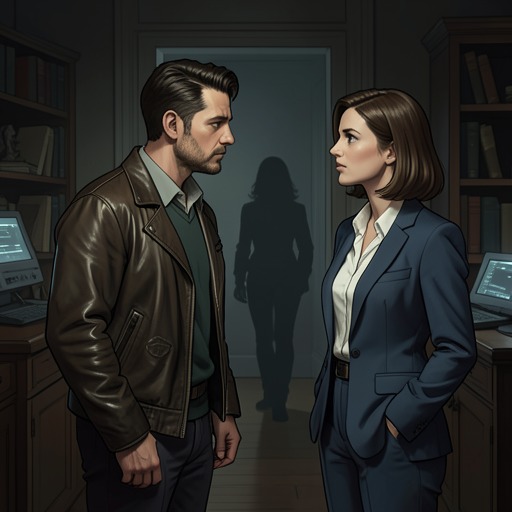
Jones’s suspicions also place Canino within the search for Rusty Regan. After seeing Canino meet Vivian Regan outside the Sternwood estate, Jones wonders whether Canino knows something about Regan and is trying to profit from it on the side. Jones cannot establish what passed between them or what the meeting meant. His inference therefore adds suspicion to the case rather than resolving the mystery, and Canino remains part of a network whose dealings are only partly visible.
Murder of Harry Jones
Canino’s role becomes unmistakable when he meets Jones, who is trying to help Marlowe. From outside the room, Marlowe hears Jones call the exchange a success, followed by the signs that he has become violently ill. Canino asks whether one drink could have made him sick, receives no answer, and leaves after Jones falls silent. The scene establishes that Canino uses poison to kill without turning the murder into a public confrontation.
Marlowe later tells Mona Mars that Canino has killed a harmless man who was trying to help someone. That judgment gives the killing a moral weight beyond its tactical purpose: Jones’s effort to assist the investigation is answered by a death designed to protect the interests Canino serves. Canino’s violence is not merely a threat; it removes a witness and narrows what others can learn.
Conflict with Marlowe and Death
At the Realito hideout, Marlowe confronts the protection Mars’s operation provides. He describes Mars as a man who uses Canino to kill while preserving his own distance from the act. The distinction is central to Marlowe’s accusation: Mars may not commit the killing himself, but Canino makes his power lethal. Mona’s resistance to that characterization does not alter what Marlowe has just learned about Jones’s death.
The confrontation ends in a gunfight. After Canino fires, Marlowe waits until he can no longer safely do so, then shoots him four times. Canino falls in the wet gravel and makes no further sound; Marlowe retrieves and kicks aside his gun. Mona, standing nearby, says she had feared Marlowe would return. Canino’s death ends his direct role in the events, but it does not by itself expose or settle the broader network in which he worked.
Narrative Significance
Canino’s characterization is deliberately economical: the reader learns who he is chiefly through reports of his work, the evidence of Jones’s murder, and the final armed encounter. That limited presentation suits his function in the hard-boiled crime plot. He is a person, but also the visible endpoint of violence that another man can commission and disavow.
His death contrasts with the novel’s public account of the earlier murders. Newspaper stories credit Captain Cronjager with solving the cases while omitting the connections among Canino’s employer, the Sternwood family, and Marlowe’s private investigation. Canino is removed from the immediate field of action, yet the concealed structure that made his work possible remains part of the novel’s unresolved moral landscape.